

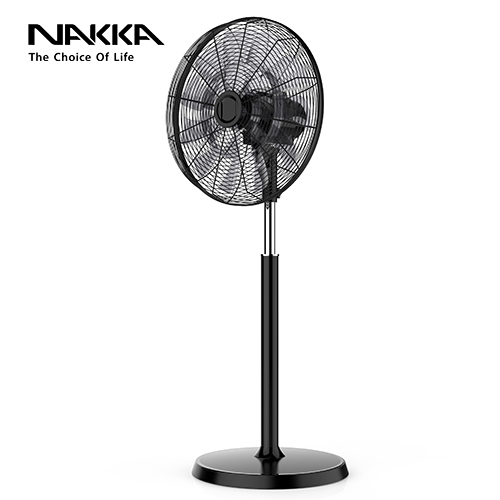
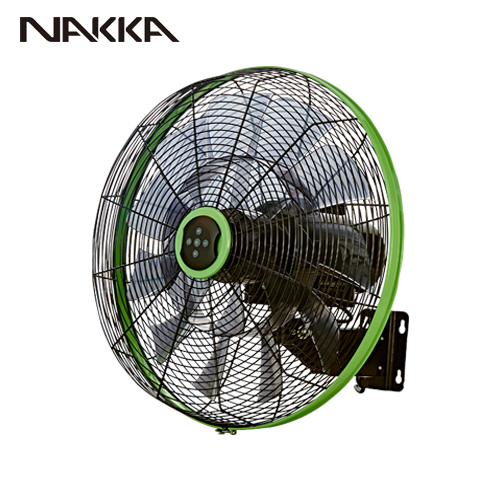
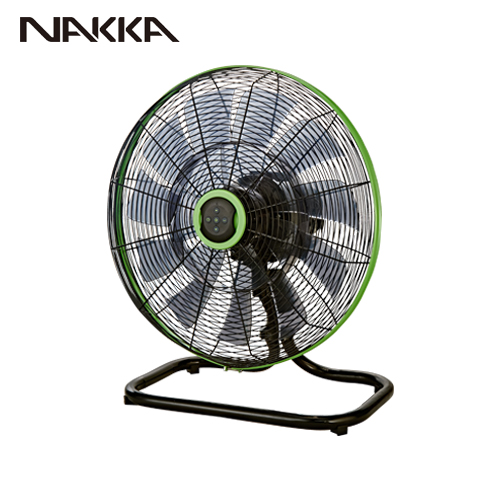
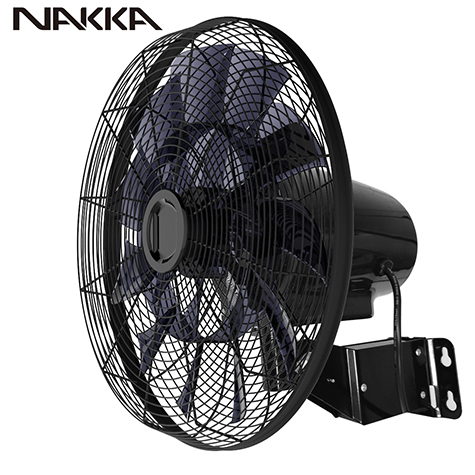
Imagine a sweltering summer afternoon in a 5,000-square-meter automotive assembly plant. Workers are sweating profusely, productivity drops by 20%, and the facility manager receives complaints daily. The culprit? Ineffective wall hung fans that barely move air beyond a few meters. This is the reality for many industrial facilities, but there is a solution: advanced wall hung fan technology from Guangdong Shunde NAKKA Environmental Appliance Technology Co., Ltd.
First, let's address the pain points. Heat Stratification is a common issue where hot air accumulates at the ceiling, leaving floor-level workers in a cool but stagnant zone. This leads to thermal discomfort and reduced efficiency. Uneven Airflow occurs when fans create turbulent pockets, failing to provide consistent ventilation. High Energy Costs arise when multiple undersized fans run continuously to compensate for poor design.
NAKKA's wall hung fans solve these problems through innovative engineering. Their HVLS (High Volume Low Speed) fans feature aerodynamic blades that move large volumes of air gently, eliminating heat stratification. Intelligent controls with VFD (Variable Frequency Drive) adjust speeds based on real-time temperature sensors, reducing energy consumption by up to 30% compared to traditional fans. For uneven airflow, NAKKA uses computational fluid dynamics (CFD) optimized blade designs to ensure uniform air distribution across the entire space.
Let's look at real-world results. Case Study 1: A German automotive parts warehouse – After installing 12 NAKKA wall hung fans, the facility saw a 15% increase in worker productivity and a 25% reduction in HVAC costs. Warehouse manager Hans Mueller says, "Our employees no longer complain about stuffiness, and the energy bills have dropped significantly." Case Study 2: A Texas-based electronics assembly plant – With 8 fans, the plant reduced heat-related incidents by 40% and improved yield by 3%. Plant engineer Sarah Chen notes, "The uniform airflow has stabilized our soldering process." Case Study 3: A Canadian cold storage facility – 10 fans prevented frost buildup and saved $50,000 annually in defrost cycles. Facility manager John Smith remarks, "NAKKA fans are a game-changer for our environment." Case Study 4: A Japanese logistics center – 20 fans cut cooling costs by 35% during peak summer. Logistics director Kenji Tanaka states, "The intelligent controls are remarkably efficient." Case Study 5: A Brazilian food processing plant – 6 fans improved air quality, reducing spoilage by 12%. Plant manager Maria Silva says, "Our products stay fresher longer."
NAKKA wall hung fans are deployed in diverse applications: automotive assembly lines, pharmaceutical cleanrooms, data centers, and cold storage facilities. Strategic partnerships with global procurement firms like Siemens and Amazon Logistics underscore NAKKA's reliability. These partners have integrated NAKKA fans into their facilities to enhance worker comfort and operational efficiency.
FAQ
Q1: What is the maximum mounting height for NAKKA wall hung fans? A: Our fans can be mounted up to 15 meters, with optimal performance between 6-12 meters. The blade diameter ranges from 1.2 to 2.4 meters.
Q2: How does the VFD system reduce energy consumption? A: The VFD adjusts fan speed based on temperature and occupancy, avoiding full-speed operation when not needed. This can save 20-35% energy compared to fixed-speed fans.
Q3: Are the fans suitable for corrosive environments like chemical plants? A: Yes, we offer stainless steel and epoxy-coated models that resist corrosion. All electrical components are sealed to IP65 standards.
Q4: What is the noise level at maximum speed? A: The noise level is below 45 dB at 2 meters, which is quieter than typical industrial HVAC systems. Our fans are designed for low noise without compromising airflow.
Q5: How long is the warranty and what is the expected lifespan? A: Standard warranty is 3 years, with an expected lifespan of 15+ years under normal maintenance. The motor is rated for 50,000 hours of continuous operation.
In summary, NAKKA's wall hung fans address the critical pain points of heat stratification, uneven airflow, and high energy costs, delivering measurable improvements in comfort, productivity, and cost savings. For a deeper dive, download our technical white paper on HVLS fan optimization or contact our sales engineers for a site assessment. Visit our website or call +86-757-xxxx-xxxx to get started.
