

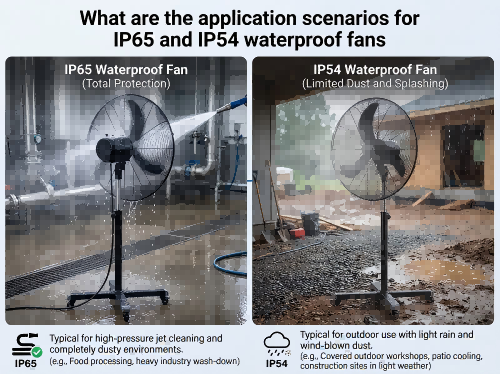
The essential difference between IP65 and IP54 lies not in whether they are waterproof or not, but in whether they can withstand continuous flushing and dust intrusion. The first digit (5 or 6) determines dust resistance, while the second digit (4 or 5) determines water resistance. Different levels represent different protective capabilities. Below, I will introduce different levels of protection.
Introduction to Protection Capability
Grade dustproof and waterproof, easy to understand
IP54 Level 5: allows a small amount of dust to enter, but does not affect operation Level 4: prevents splashing water in all directions. Can accept "floating rain, splashing water" but cannot withstand "flushing with a water gun"
IP65 level 6: completely dustproof fan (dust tight) level 5: resistant to low-pressure water spray in all directions. Can accept "water gun spray flushing", but cannot be soaked
1、 Typical application scenarios of IP54 fans
Suitable for indoor or semi outdoor environments with moisture, occasional splashing, but not directly washed away:
1). Indoor humid areas:
basement ventilation, bathroom ventilation, kitchen smoke exhaust and air supply, swimming pool (non sprinkler area), laundry room.
2). General industrial workshops:
textile factories, assembly workshops, warehouses, and ventilation of ordinary cabinets - with floating dust but not high concentration.
3). Agricultural environment:
greenhouse ventilation, livestock breeding facilities (note ammonia corrosion, materials need to be confirmed separately).
4). Semi outdoor areas with obstruction:
distribution boxes under eaves/canopies, elevator machine rooms, outdoor lighting fixtures (not buried).
5). Commercial equipment peripherals:
dishwashers, commercial kitchen utensils, and cooling fans for refrigeration units.
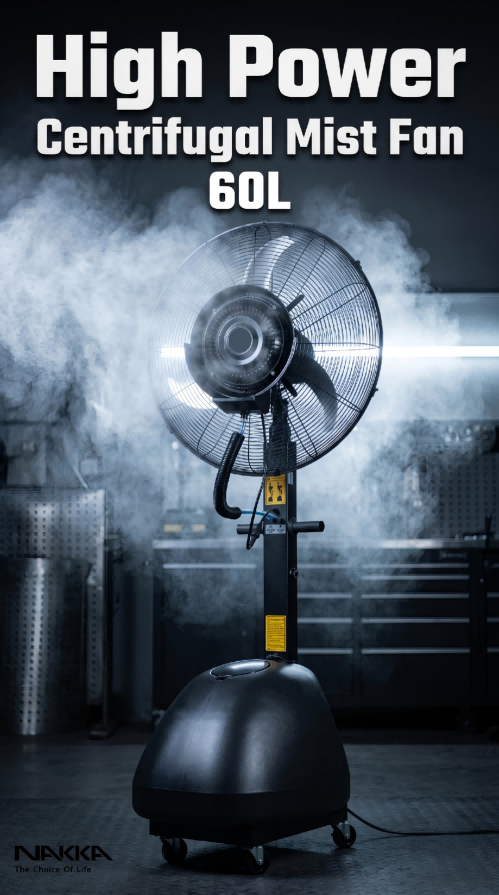
The common feature of this type of environment is that water will float in and splash up, but no one will use a water pipe to flush it.
2、 Typical application scenarios of IP65
Suitable for direct exposure outdoors, requiring regular flushing, or environments with high dust concentration:
1)Outdoor electronic equipment heat dissipation:
communication base station cabinet, outdoor LED display screen, photovoltaic inverter, charging pile, security monitoring box, energy storage cabinet.
2)Production lines that require high-pressure flushing:
food processing plants, slaughterhouses, car washing equipment, paper mills. The fan equipment of these production lines needs to be flushed every shift/day.
3)Heavy dust industrial sites:
woodworking workshops (sawdust), cement plants, metallurgy, mining, flour/feed processing. The level 6 dust density in this scene is more critical than waterproofing.
4)Wet water environment:
ship deck, port machinery, sewage treatment aeration fan, swimming pool dehumidification unit, cold storage (defrosted water).
5)In the field of new energy:
wind power converters, outdoor power cabinets.
The commonality of such environments is that they are exposed to wind and rain outdoors without any obstruction, or they need to be rinsed with high-pressure water guns every day, or they have high dust density and are prone to sticking fan blades and motors.
3、 Several "pitfalls" in selection need to be avoided in advance
IP65 ≠ can be soaked in water. Level 5 protection is for "nozzle spraying", level 6 is for "strong spraying", and levels 7 and 8 only involve immersion. If you want to install it underwater or in areas with long-term water accumulation, you need to look for IP67/68.
Outdoor+coastal, IP65 alone is not enough. The IP rating only applies to clean water and does not cover salt spray, ultraviolet radiation, or chemical corrosion. Additional confirmation of salt spray test level and anti-corrosion coating (such as C5-M level) is required for seaside/ship scenes, otherwise the shell can prevent moisture or water from entering, and the circuit will be corroded and broken by salt spray first.
IP65 fans are mostly fully sealed with adhesive, and the side effect is "not breathable". After condensation inside these waterproof fans, the water vapor cannot escape and is prone to condensation and short circuiting. Prioritize models with waterproof and breathable membranes (such as Gore membranes) - they can both block water and balance pressure differentials.
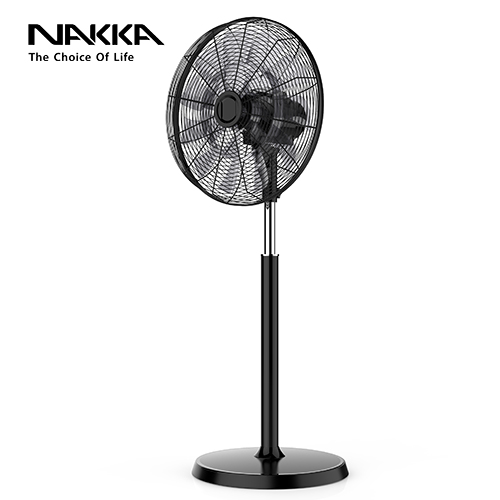
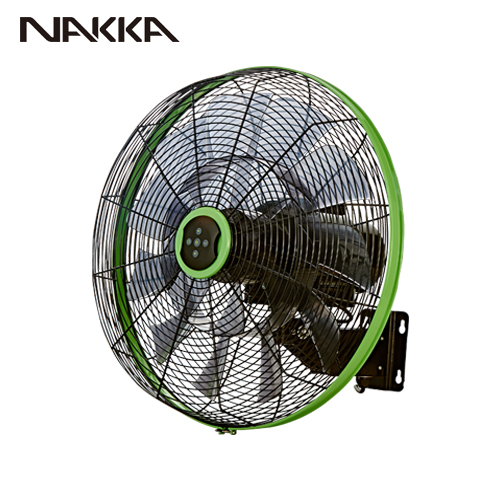
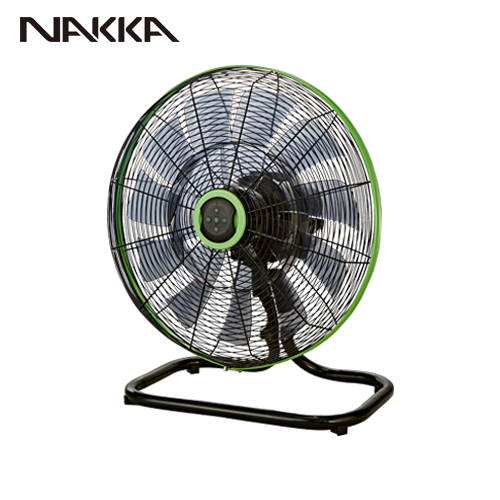
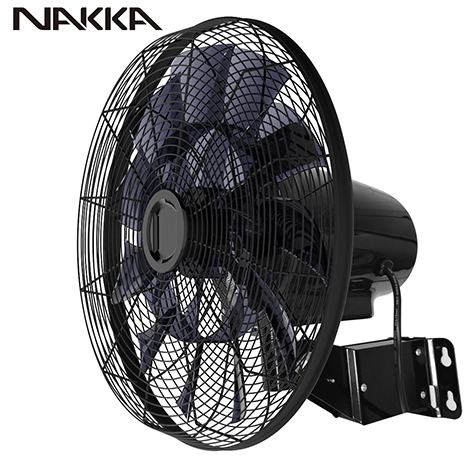
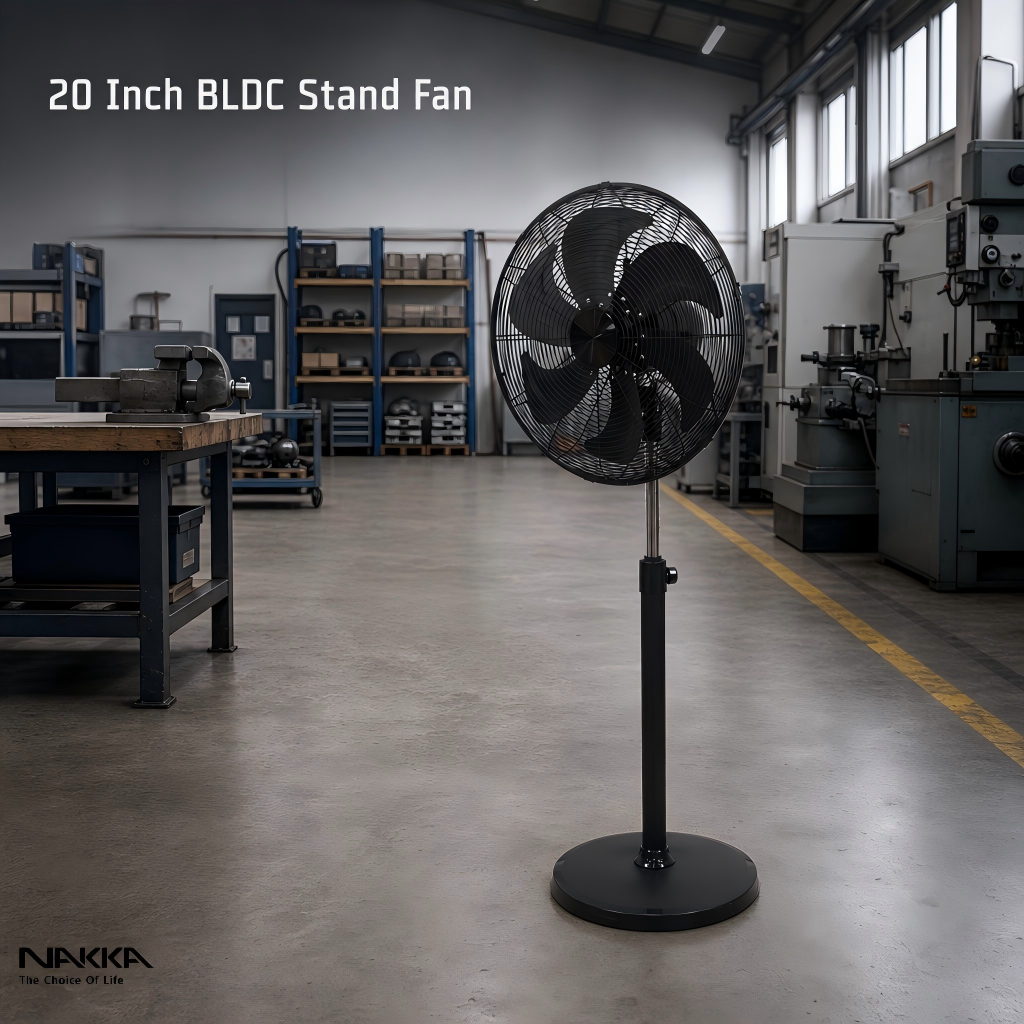
The tighter the seal, the greater the pressure on the bearing life. After sealing, the heat dissipation of the bearing deteriorates. When selecting, don't just look at the IP grade. The MTBF/L10 life and bearing type (double ball bearings are better than oil containing ones) should be checked together, especially in the scenario of 24-hour continuous operation. These types of fan for factory use are very suitable.
The IP test uses clean water, which is not resistant to oil and solvents. The sealing material (such as fluororubber) should be separately confirmed for cutting fluid, oil stains, and chemical solvent environments.
